Jeju Island

Cheju Island, alternately known as Chejudo or Jejudo, is an oval-shaped volcanic landmass covering 1,845 square kilometers (712 square miles) off the southern tip of the Korean Peninsula.

Jiuzhaigou Valley of China

Jiuzhaigou, which means "Valley of Nine Villages", is regarded as one of the most beautiful place in China. This nature reserve is located on the north of Sichuan province in central China, bordering on Tibet.

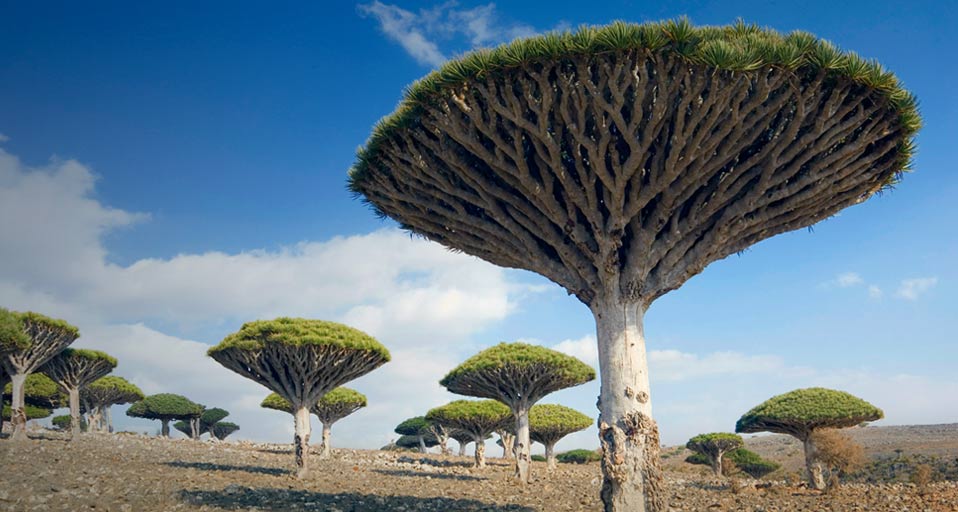
Socotra Island, Yemen

Socotra Island is an attractive natural landscape. God bestowed it with distinct bio-diversity rich in creatures and beautiful plants..

Manafaru Beach of Maldives

Manafaru Beach (5star Hotel) sits at the most northerly tip of the Maldives, idyllically set on a 14 hectares of private island within the unspoiled beauty of the Haa Alif atoll in northern Maldives, is surrounded by a colorful coral reef worth exploring and little explored by foreigners and totally un-polluted by the noise of passing speedboats and is just about the most tenuous country on Earth.

Showing posts with label Greatest Caves. Show all posts

Actun Tunichil Muknal

11:42 PM

This is the acclaimed “Cave of the Crystal Maiden,” one of the most spectacular natural and archaeological attractions in Central America. The trip to Actun Tunichil Muknal, or ATM, as the cave is also known, is for fit and active people who do not mind getting wet and muddy—and who are able to tread lightly around ancient artifacts.

Just about 1-1/2 hrs drive southeast of San Ignacio we arrive at the car park where we reorganize for a 45 minute hike through the jungle with three knee-high river crossings on the hike to the cave entrance.

The cave has a rich archeological history of the Ancient Maya, with dates of activity recorded from the Classic Period of 200AD to the Late Classic of 900AD.

Actun Tunichil Muknal cave was used by the Late-Classic Maya as a place for sacrifice. The cave’s sacrificial room is a broad raised area reachable only by wading and swimming the underground river back for about a mile then climbing a large rock to step across to a ledge near the ceiling.

As with any cave exploring, one can only think of where to put one’s foot so as not to slip and which rock to grab when falling to avoid the sharp ones.

Around the edges of this large space are many offerings containing human skulls and pots of different shapes and sizes.

Lying undisturbed for a thousand years the bones and pottery are covered with waterborne calcite.The Maya had many ways to solicit the spirits. One method of sacrifice was to remove the lower jaw while the victim was still alive which, it is said, makes the eyes pop out.
There is evidence elsewhere of this procedure carved in stone as well as in paintings on ceramics. The lower jaw is missing on most of these skulls. Another way to sacrifice is face flaying but this may not have been done at the same time as jaw removal as the victim would already be dead.


The History of ATM

Actun Tunichil Muknal was discovered in 1989 and opened to the public in 1998. Dr. Jaime Awe, a Belizean archaeologist was the first to explore the cave. Dr. Awe and his Western Belize Regional Cave Project (WBRCP) conducted archaeological research at Actun Tunichil Muknal from 1993-2000.

In January of 2003, it was decided that 455 acres of the Tapir Mountain Nature Reserve would be re-designated as a natural monument. Official signing of the Memorandum of Understanding between the Belize Audubon Society and the Institute of Archaeology (IoA) occurred on June 10, 2004. This agreement was the first of its kind to be signed by the Society for the co-management of an archeological site.

Getting There

Actun Tunichil Muknal Natural Monument is located south of Teakettle Village in the Cayo District. The junction is at mile 52 on the Western Highway. Due to the sensitive nature of this cave only two tour companies are licensed to take guests here: Pacz Tours and Mayawalk Tours, which are based in San Ignacio. Tickets must be purchased in advance.

Eisriesenwelt, Austria

12:15 AM

The Eisriesenwelt is the largest accessible ice cave in the world. It is located in the Austrian Alps, near the town Werfen , in the mountain Hochkogel, which is 2281 m high. The complex of caves and tunnels, which is the world's biggest ice cave is sometimes referred to as the World of the Ice Giants in Werfen .

If you are looking for a different thrill with the most astounding natural scenery that you can find, the Eisriesenwelt Caves in Werfen, Austria will capture your heart as an amazing limestone ice cave.

The cave would provide you one of the most thrilling experiences during your Austria visit. In Eisriesenwelt Caves, the ice remain frozen throughout the year. The ice cave is located at the height of 1640 metre. Usually the temperature remains under zero, so make sure to be prepared to save yourself from the cutting cold.

The Eisriesenwelt (German for "World of the Ice Giants"), was once feared by locals as "the entrance to Hell," not being first explored until 1879 by a man named Anton Posselt. What was Posselt's inspiration for venturing off into this Austrian abyss with little more than a lamp and an ice pick? Maybe a mental disorder, who knows, but we can all thank him for it.

How to Reach
Eisriesenwelt Caves can be reached on the Tauern motorway, on the trunk road from Salzburg or by train. The mountain road up to the parking area, situated at an altitude of 1000 meters, is open for all the vehicles. Local buses are also available from the Werfen village. People who are comfortable walking 5 km can reach on foot also. There are no electronic lights in the cave. One have to guide himself on his own with the help of carbide lamps provided.

Practical information for visitors

The cave system is opened for public from 1 May to 26 October from 9:30 am to 3:30 pm. In July and August, it is opened until 4:30 pm. The tour of the cave Eisriesenwelt takes about 4 hours, so it is advisable to dress warmly and wear good boots because it might be slippery. Taking gloves is also a good idea as the railings are covered in ice. Visitors are recommended to sensibly judge their strengths before the tour because the tunnels are narrow and slippery.

Crystal Cave of Bermuda

2:28 AM

 Crystal caves in Bermuda is about 120 feet under the ground and is one of the largest caves in Bermuda. The caves are the most famous of many subterranean caves in Bermuda and are located in Hamilton Parish, close to Castle Harbor.

The clarity is so perfect that it is possible to see the cave floor, which at one point lies 55 feet below the deep blue underground Cahow Lake. The cave features a variety of formations that include: soda straws and stalactites. However, some crystal formations have been damaged by earthquakes in the far past.

Crystal is the most famous and visited cave in Bermuda. It's believed to have been discovered by two 14-year-old boys in 1905 when they went looking for their lost ball. Instead of going down via 140 feet of strong rope tied to a tree like they did, you can walk down 83 steps to view the magnificent crystal stalactites and stalagmites. You can only touch two broken-off crystals because they take hundreds of years to grow.

In fact, they grow only a cubic inch every century. Crystal cave is 1.6 million years old and that's considered young. Down below you can explore the crystals along a wooden floating pontoon walkway that sits on top of a clear 55-foot-deep lake.

The Crystal Caves Bermuda is owned by the Wilkinson family since 1884. It has been dubbed “ Crystal” because of the crystal clear blue pool of water that occupies it.

Indeed, the water is so clear that its transparency offers a view of the cave floor. In certain points, the cave has a depth of 55 feet below the water surface. Adorning the caves are numerous stalactites and stalagmites formed over several million years.

Puerto Princesa Underground River

6:31 AM

The Puerto Princesa Subterranean River National Park ( Also previously known as the St. Paul subteranean river) is a UNESCO World Heritage Site located about 50 kilometers north of the city of Puerto Princesa in the province of Palawan, Philippines. It contains the renowned Subterranean River, thought to be the longest navigable underground river system in the world. The National Park is part of the Saint Paul Mountain Range situated on the northern coast of the island.

The Puerto Princesa Subterranean River National Park features a limestone karst mountain landscape with an 8.2 km. navigable underground river. A distinguishing feature of the river is that it winds through a cave before flowing directly into the South China Sea. It includes major formations of stalactites and stalagmites, and several large chambers. The lower portion of the river is subject to tidal influences. The underground river is reputed to be the world's longest.

The area also represents a significant habitat for biodiversity conservation. The site contains a full mountain-to-the-sea ecosystem and has some of the most important forests in Asia.

Tourism

Because of its natural wonders, the Puerto Princesa Subterranean River National Park is a key destination for local and international tourists alike. According to the Palawan Council for Sustainable Development website, the park gets an annual income of about Php 5 million. This finances the maintenance, managed by the Protected Areas Management Board (PAMB) headed by the City Government of Puerto Princesa.

Travel Advisory


In order to get to the National Park, you must take the Puerto-Roxas road which goes all the way to Sabang, where the park is located. There are also daily buses which leave Puerto Princesa's San Jose bus terminal at 7am, and fare costs are at around Php 300. Two or three jeepneys also take the same route, leaving the terminal at the same time, but are cheaper at Php 200. Trips take three hours.

To explore the Subterranean River, one must secure a permit at the Tourist Information and Assistance Center at the Sabang pier. This costs Php 150 for Filipinos and Php 200 for foreigners. The office can also arrange boat transport to the river (round trip P700, 15 minutes). Then after a five minute walk to the actual entrance, you will be given a lifejacket and helmet, and assigned a boat and driver for the trip to the cave.
The boat ride takes you inside the cave for only about 5 kilometers, since beyond this the river becomes difficult to navigate. The round trip takes about 45 minutes. Cameras are allowed.

History

The PPSRNP was established on March 26, 1971, by virtue of Presidential Proclamation No. 835 issued by the late President Ferdinand E. Marcos. Formerly known as the St. Paul Subterranean National Park, it initially comprised of 3,901 hectares of terrestrial reservation. To ensure long-term viability, former President Joseph E. Estrada signed Proclamation No. 212 on November 16, 1999 expanding the area of the Park to 22,202 hectares that now includes the entire catchment for the Underground River and significant forest important for biodiversity conservation.

It was also renamed to Puerto Princesa Subterranean River National Park to properly identifying it with the place. The PPSRNP was also declared as a National Geological Monument on December 11, 2003 by the National Committee on Geological Sciences (NCGS).

 
  • Followers